
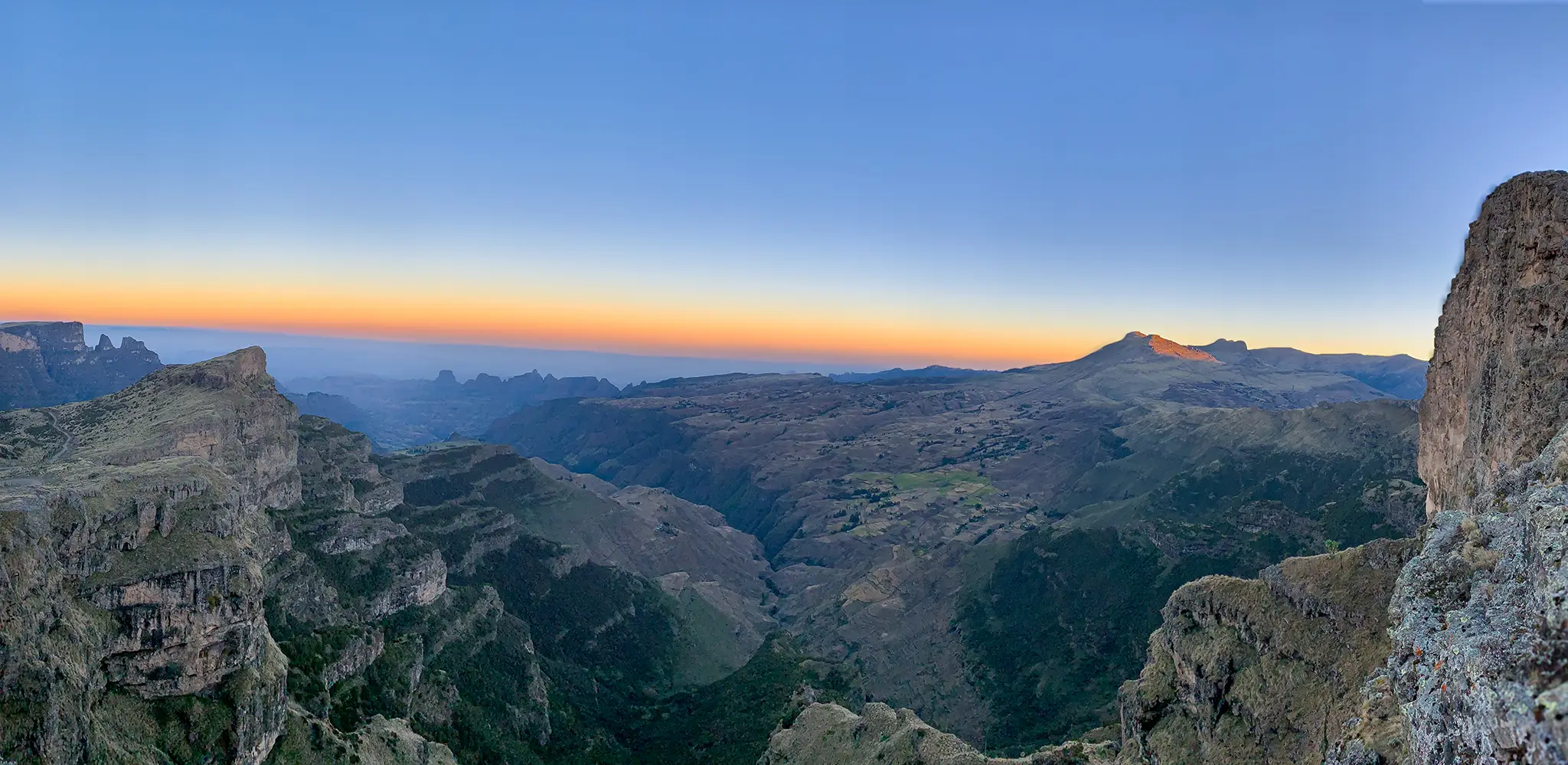
The Simien Mountains National Park in northern Ethiopia is one of the most spectacular trekking areas in Africa. Huge cliffs drop hundreds of metres to the lowlands, the high plateau is home to Gelada baboons and the rare Walia ibex, and the views change with every hour of light. The park is a UNESCO World Heritage Site. Here is what to expect on a Simien trek and what to bring.
Where are the Simien Mountains?
The park lies north of Gondar. The usual starting point is the town of Debark, about 2.5 hours’ drive from Gondar, where the park office, scouts and trekking teams are based. Gondar has daily flights from Addis Ababa.
A classic Simien trekking route
A popular route walks along the edge of the escarpment between the main campsites:
- Sankaber to Geech (about 6–7 hours), passing a viewpoint over Jinbar Falls, which drop around 500 metres into the gorge.
- Geech to Chenek (about 6–7 hours), via the Imet Gogo viewpoint, one of the most dramatic in the park.
Our 10-Day Simien Trek, Gondar and Lalibela Tour follows this route, with one night at Simien Lodge and two nights camping, then continues to Lalibela. For a shorter visit, our 5-Day Northern Historic Route includes a day walk in the park.
How hard is the trek?
The paths are not technical, but you walk for several hours a day at altitudes of about 3,200 to 3,900 metres. Walk slowly, drink plenty of water and tell your guide if you feel unwell. A reasonable level of fitness is enough, and mules can carry your main bag between camps.
Who goes with you?
Every group in the park must be accompanied by an armed park scout. On a camping trek, your team also includes a guide, a cook, and mules with a muleman to carry tents, food and luggage. You only carry a small daypack.

Wildlife you may see
- Gelada baboons, seen on almost every trek, often in large groups grazing along the cliffs.
- Walia ibex, a wild goat found only in the Simien Mountains, often seen around Chenek.
- Lammergeiers (bearded vultures) soaring along the escarpment.
- With luck, the Ethiopian wolf on the higher plateaus.
When to go
The best trekking months are usually October to March, in the dry season. September and October are green after the rains. July and August are usually the wettest months, with clouds that can hide the views.
What to pack
- Broken-in hiking boots and comfortable socks
- A warm sleeping bag, as nights at the camps can be close to freezing
- Warm layers: fleece, down jacket, hat and gloves
- A waterproof jacket
- Sun hat, sunglasses and high-SPF sunscreen
- A small daypack and a refillable water bottle
- A headlamp or torch
- A power bank and spare camera batteries
- Blister plasters, personal medication and a small first aid kit
- Cash in small notes for tips for the scout, cook and muleman
Ready to walk the roof of Africa?
We arrange everything: park permits, scout, cook, mules, camping and transport, and we can combine your trek with Gondar and Lalibela.